NOCD’s community is a free, open social platform where people with OCD can talk about their fears, including the taboo ones, without being censored. It works like social media rather than a support group, with a feed, search, reactions and replies, and it’s moderated around obsessive behaviors as well.
Context
How do you build a community for people with OCD? Shame and taboo are a large part of
why OCD is so hard to diagnose: most people never say their most distressing thoughts out
loud, not even to a doctor. Reassurance-seeking is also a compulsion. It brings real relief,
and that relief is what keeps OCD going. A community that responds to every post with
comfort risks feeding the exact behavior treatment is trying to break.
2×
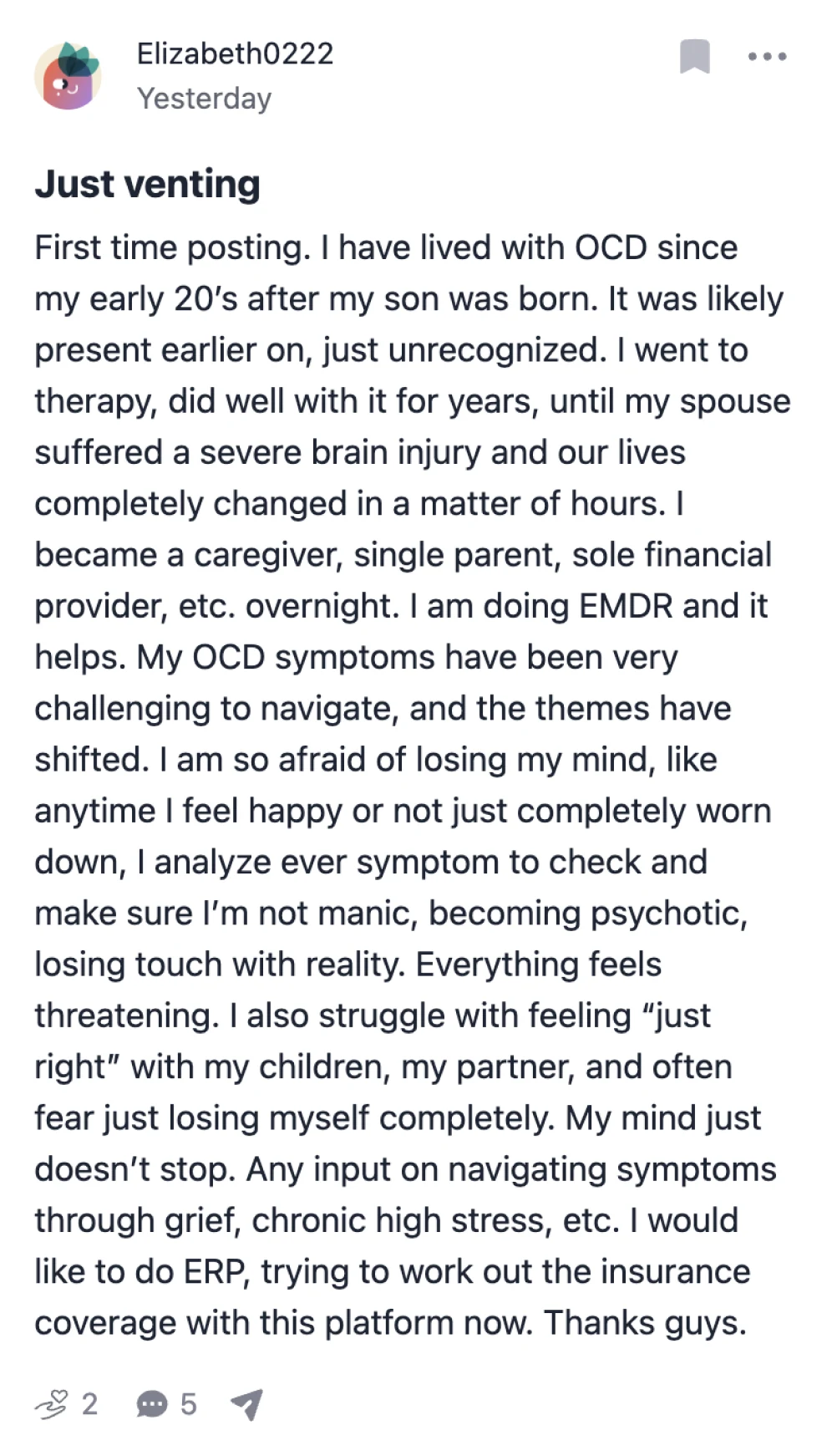
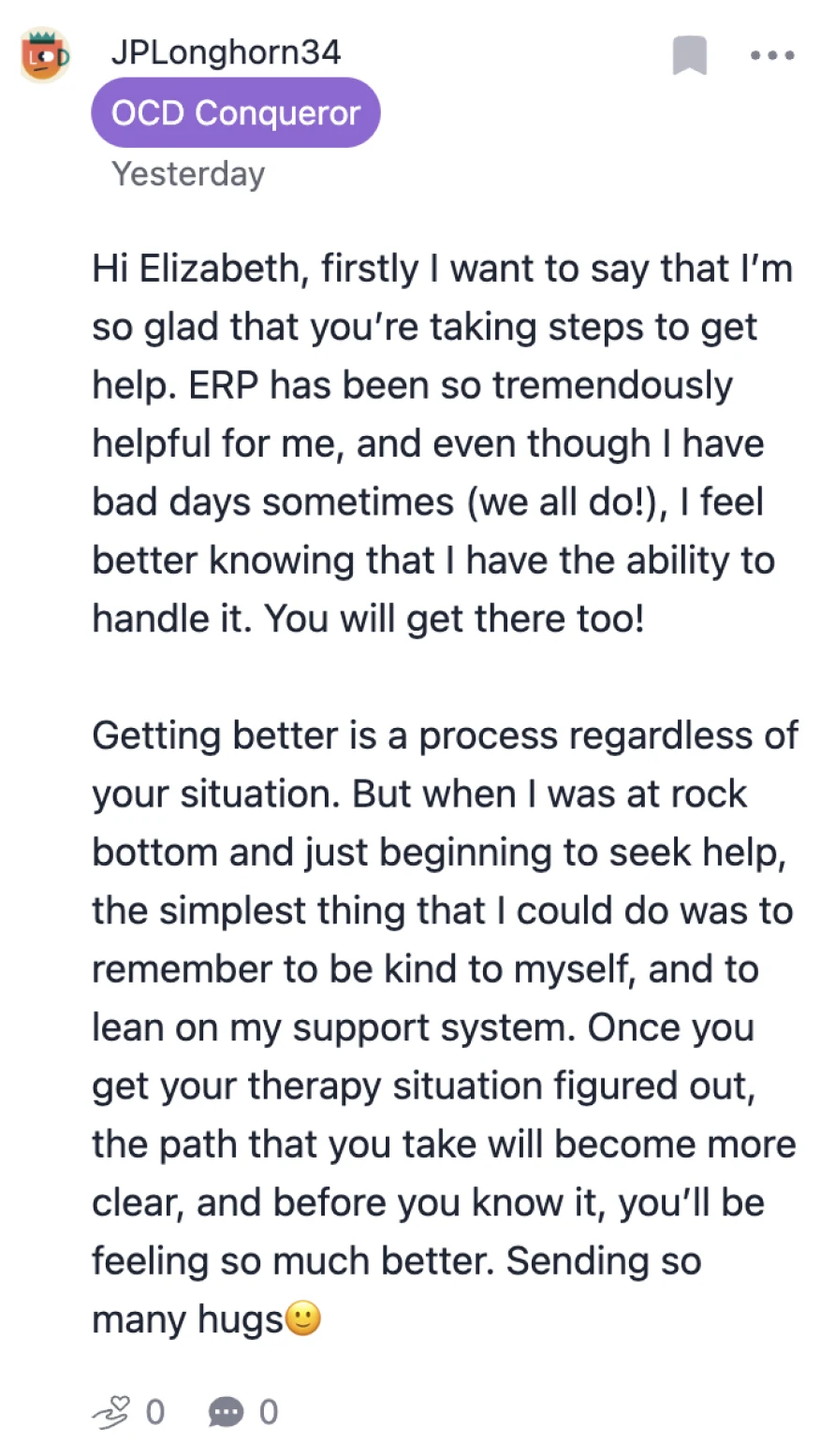
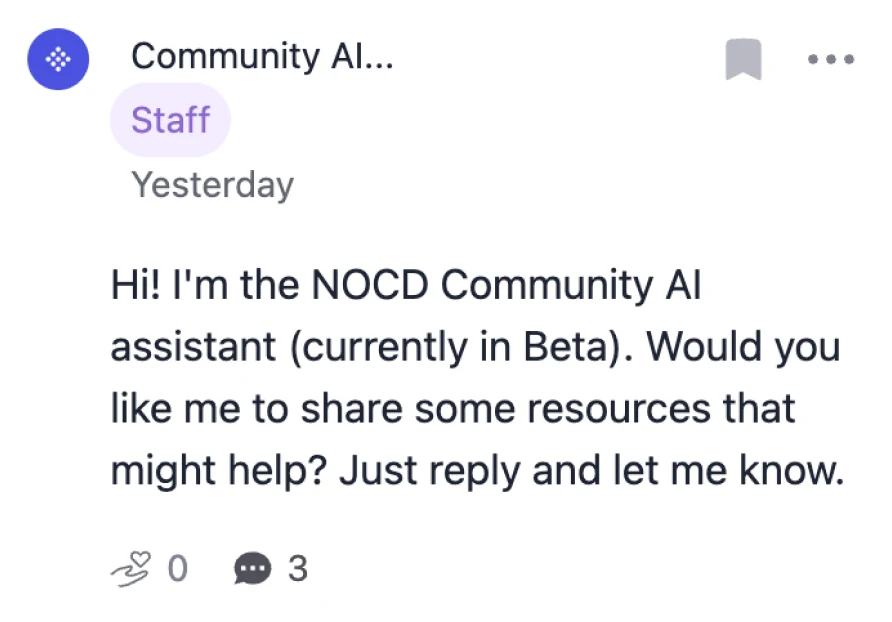
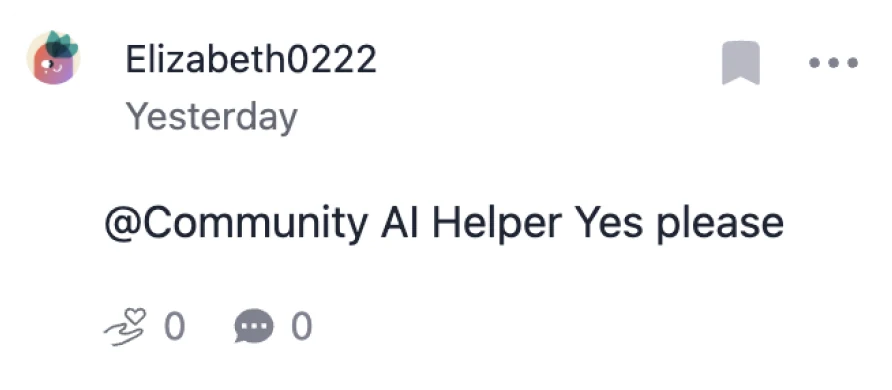
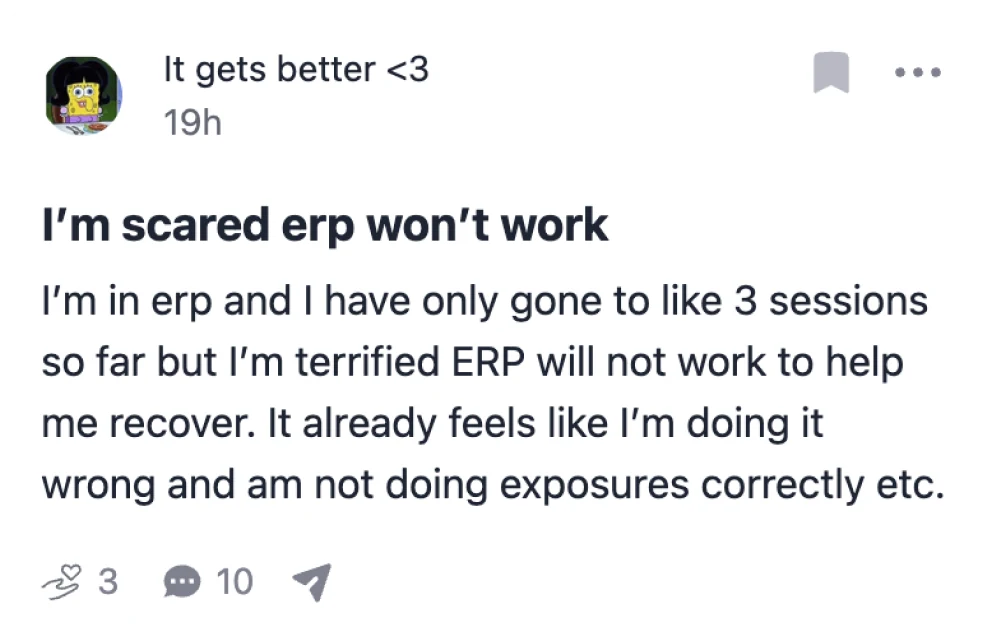
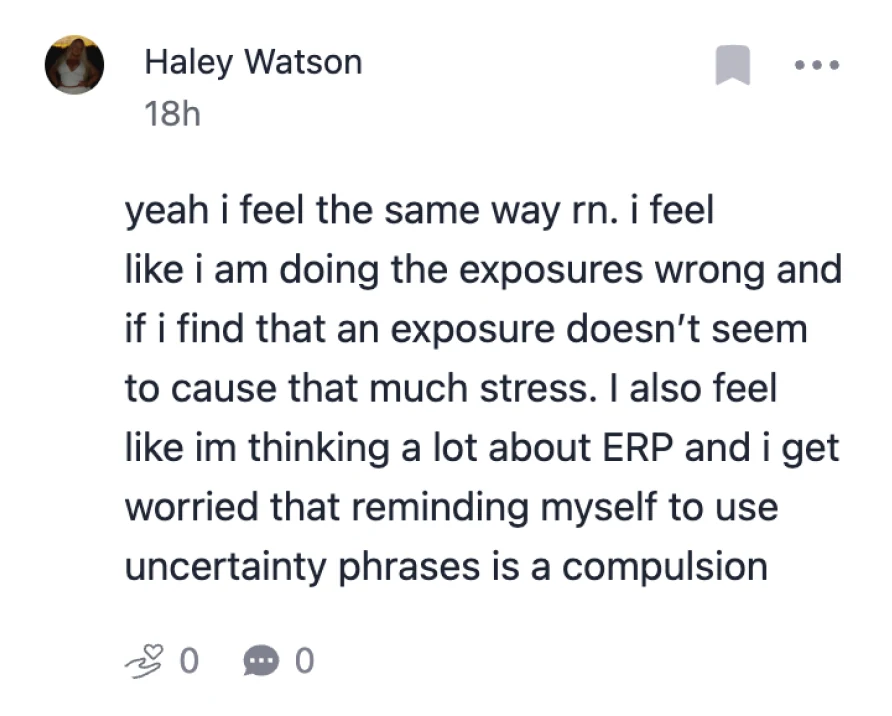
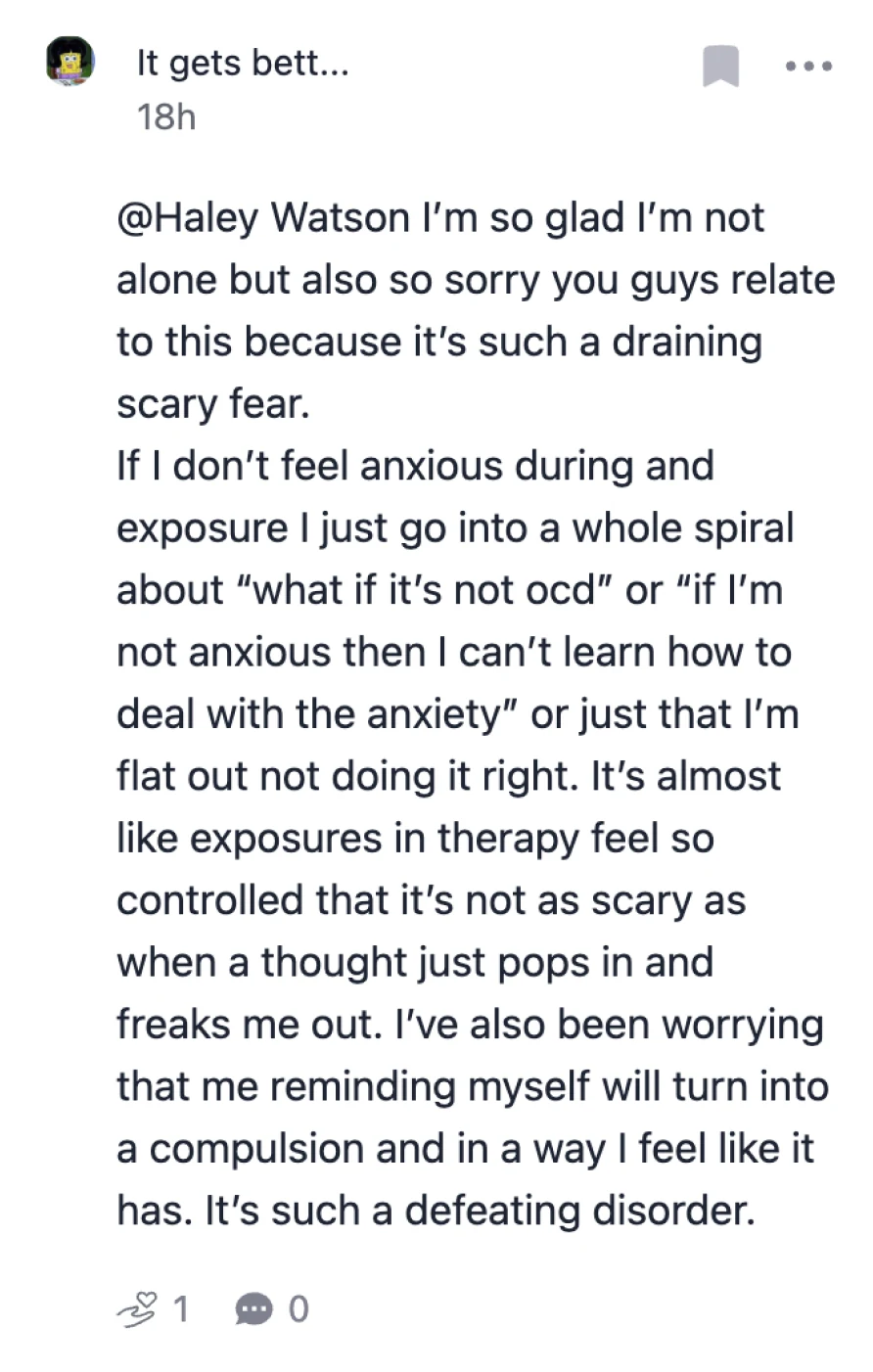
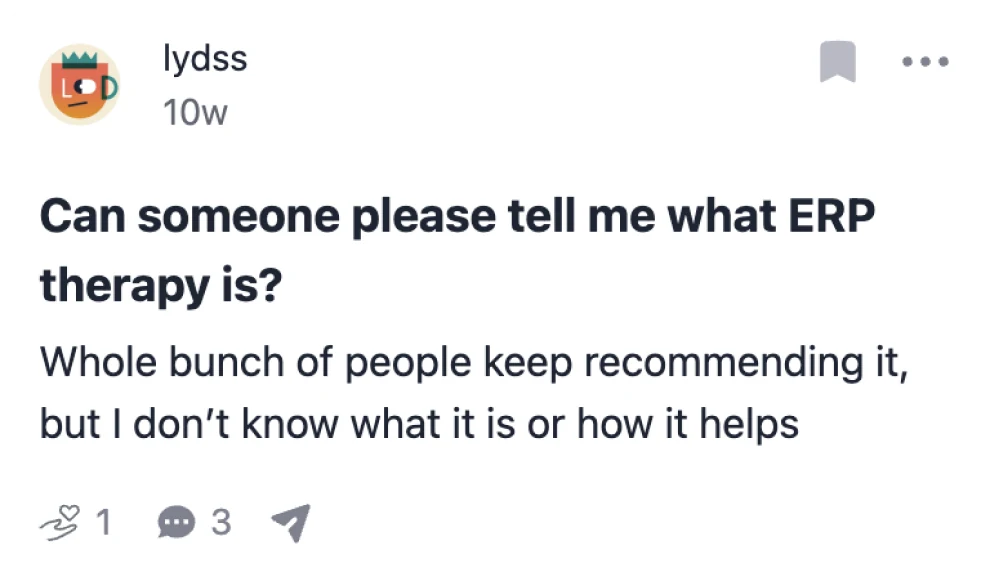
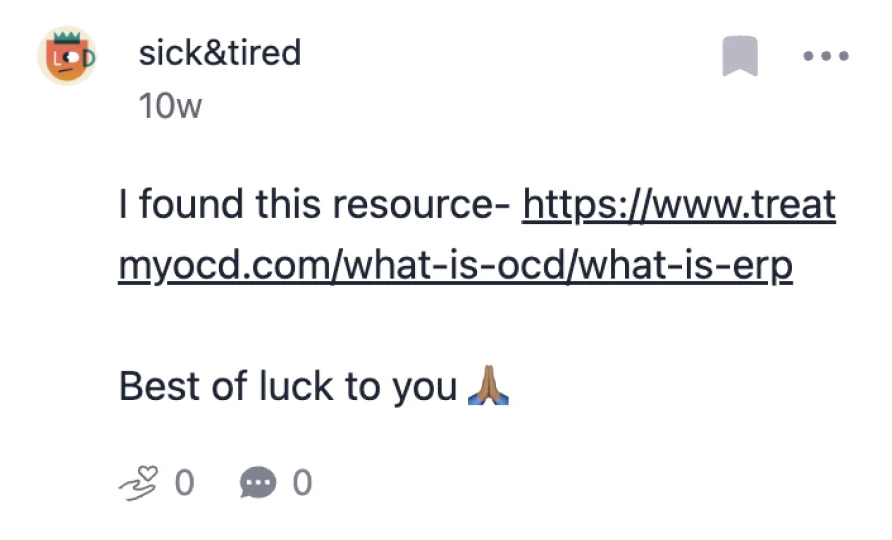
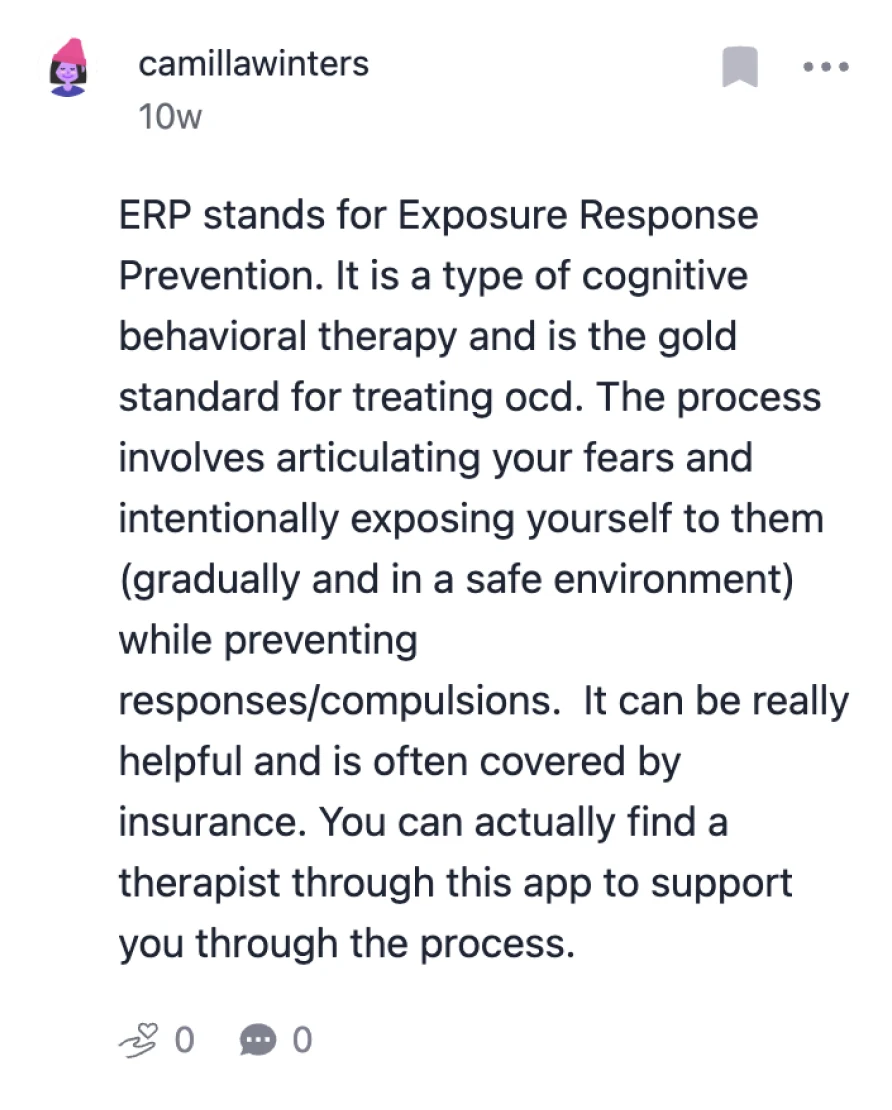
Real threads from the community.
Role
I've been the lead designer for NOCD's community for the past four years, which in
practice means acting more like a product owner than a single-feature designer: I hold the
long-term vision for the member experience. I own the UX and customer experience strategy
across teams, working directly with clinical leadership, marketing, and our CEO to get buy-in
on direction, then carrying that through into the UI, interaction design, and discovery work
for every new feature we ship.
Since I took this on, a few things have changed significantly. Here's what, and why.
2026
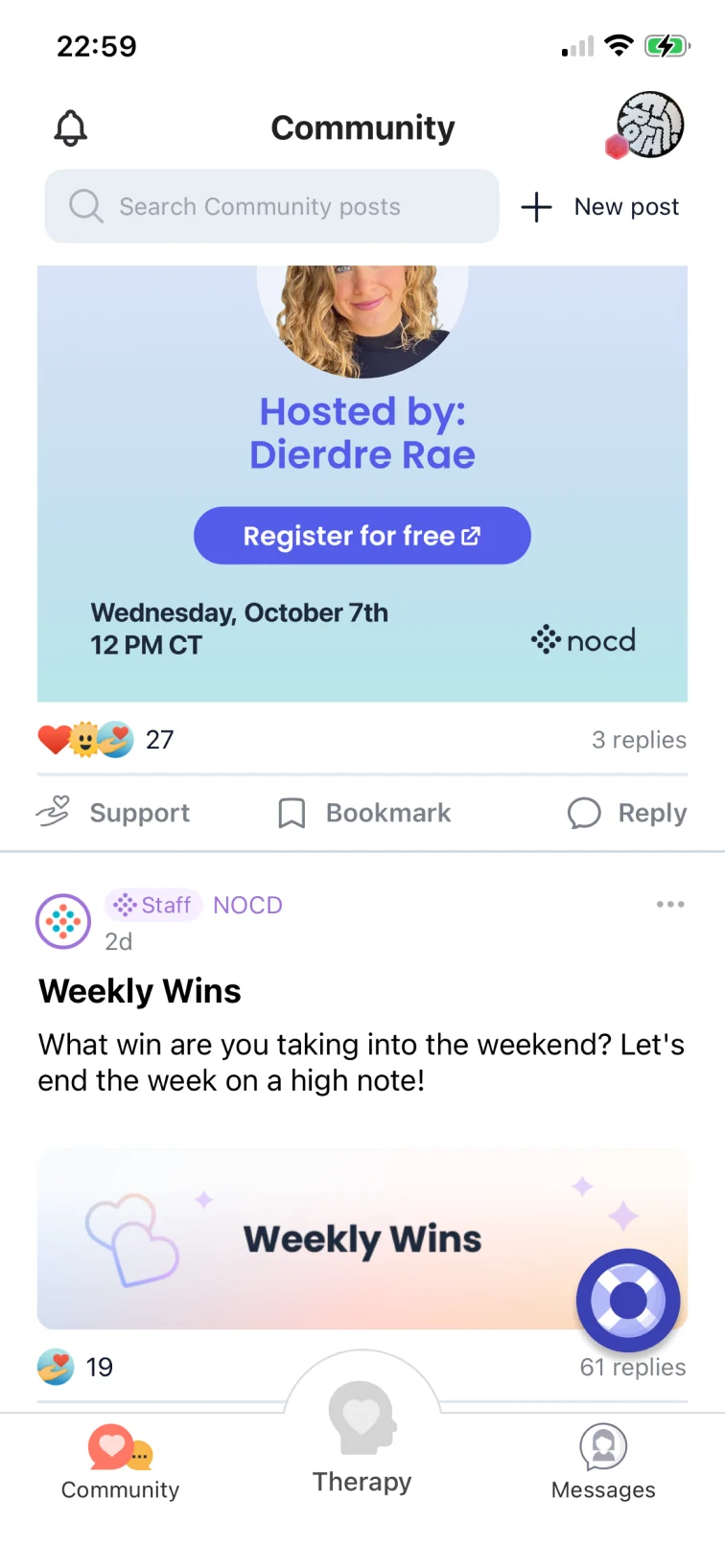
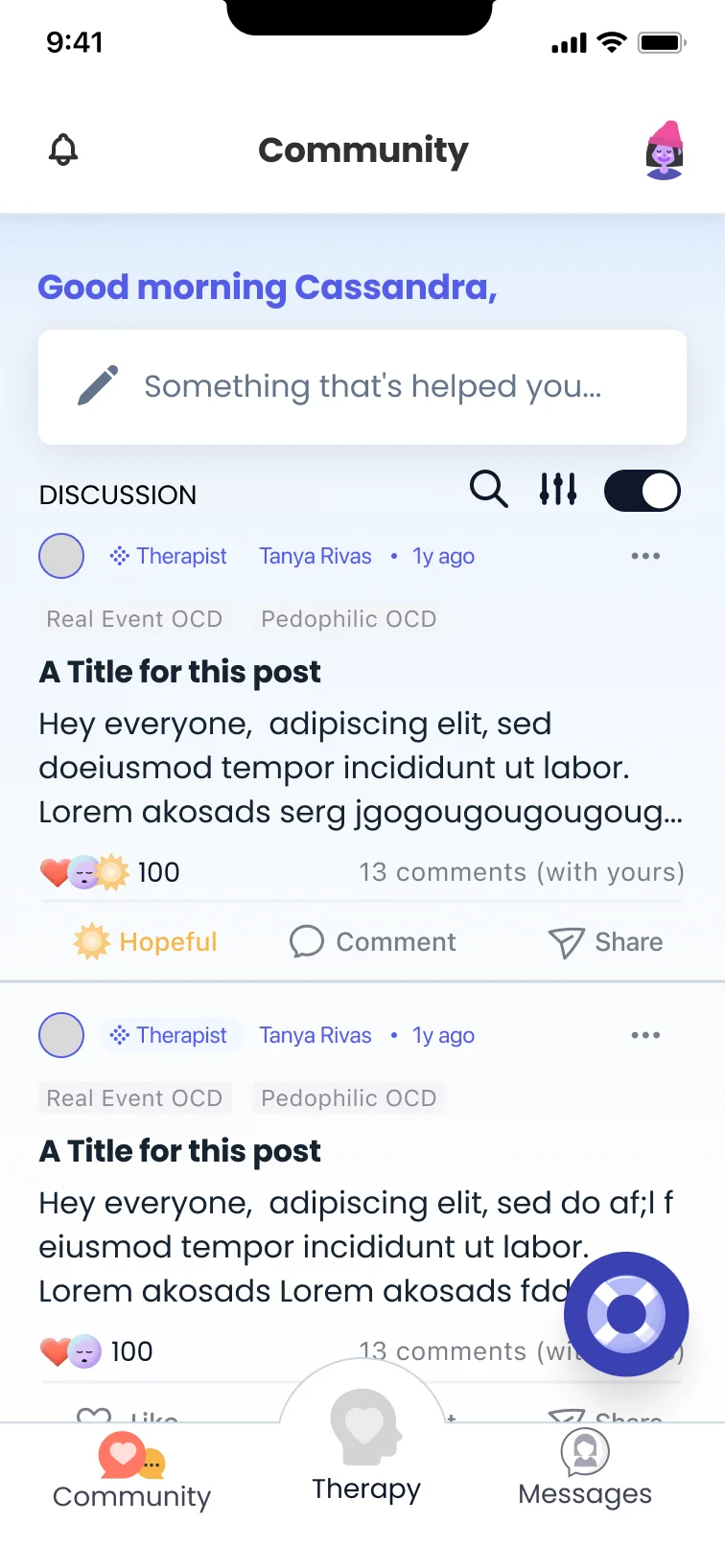
Search and New post stay in reach as you scroll. Feeds are down to three: everyone, therapy members, and your own. Prompts still greet you first.
2024
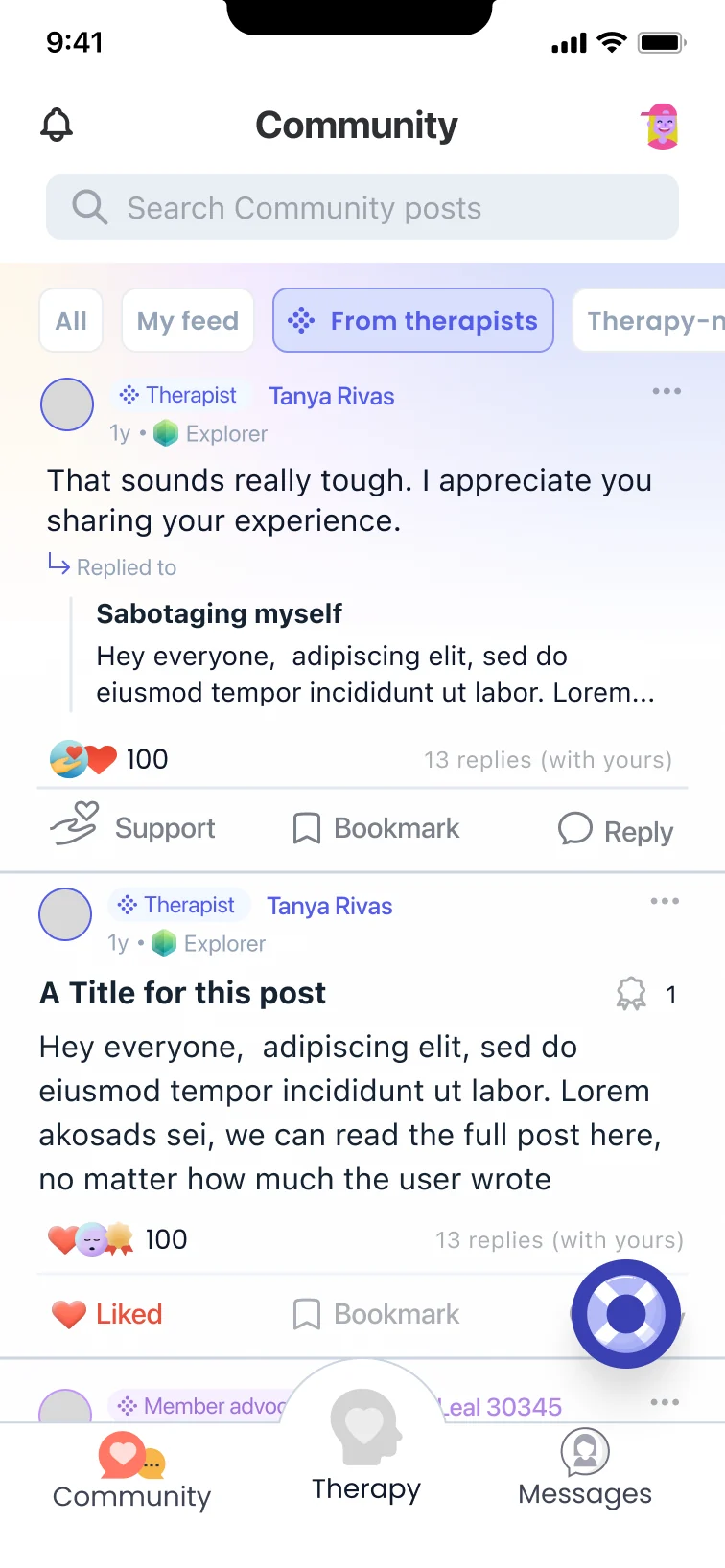
Thematic feeds, plus a short test of therapists taking part, open to therapy members only. We tried several ways of splitting the feed to see which ones people used.
2023
Reactions arrive, so showing up for someone takes a tap instead of a full reply.
2022
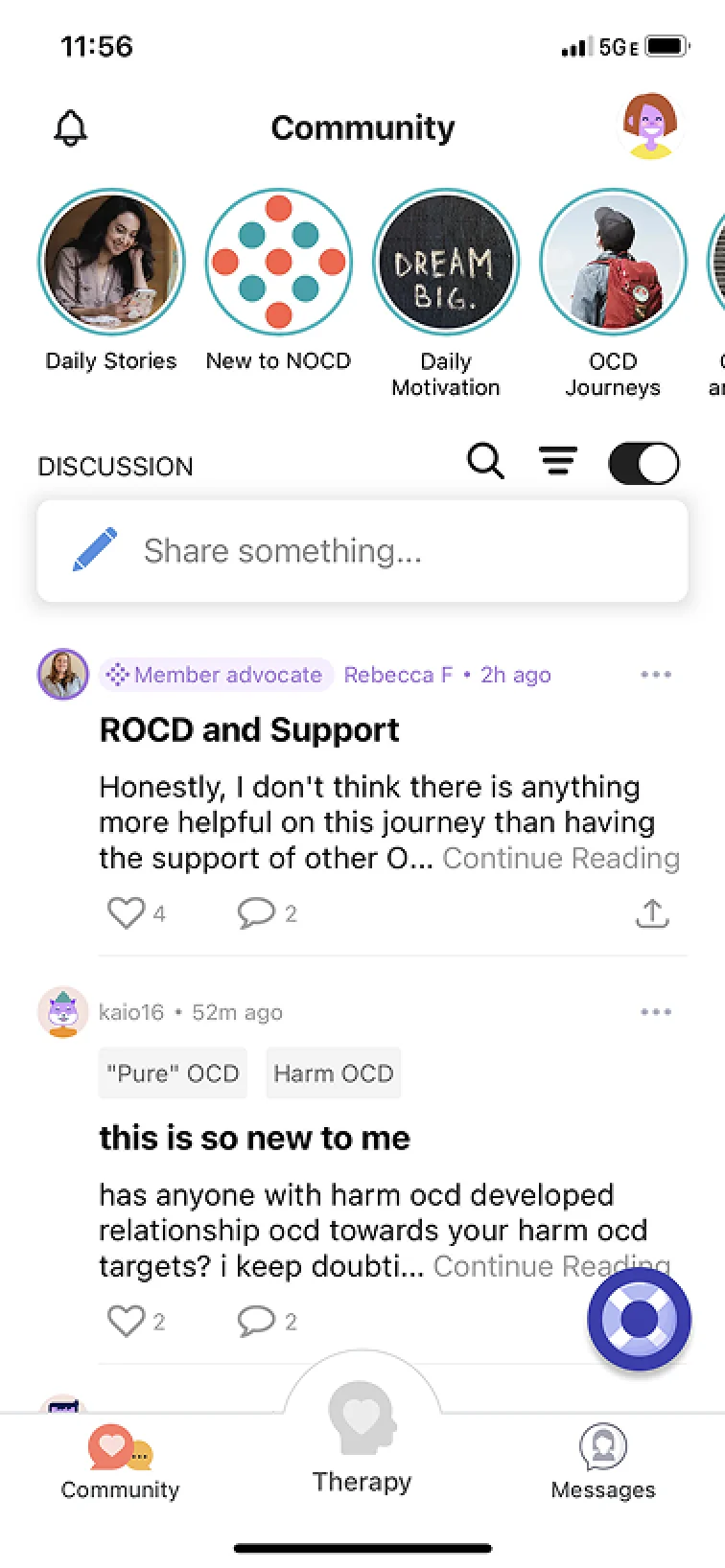
We started with a stories row and the first randomized prompts. By the end of the year the stories were gone and the feed ran full width, with Share something at the top.
The community feed, newest first.
The decisions
A community that responds to every post with comfort risks feeding the exact behavior
treatment is trying to break.
Search before you post
The community began as a place to get something off your chest, often for the first time.
That still matters. But the feed asked people to write before it helped them read, and search
was easy to miss. Someone going through exactly what you were could be one search away, and you
would never find their thread. Many posts went unanswered, and people ended up talking to
themselves.
Then Google's rules changed and AI began reshaping how people find content. We wanted our
conversations to be findable without chasing engagement for its own sake, and a post needed at
least three replies to count.
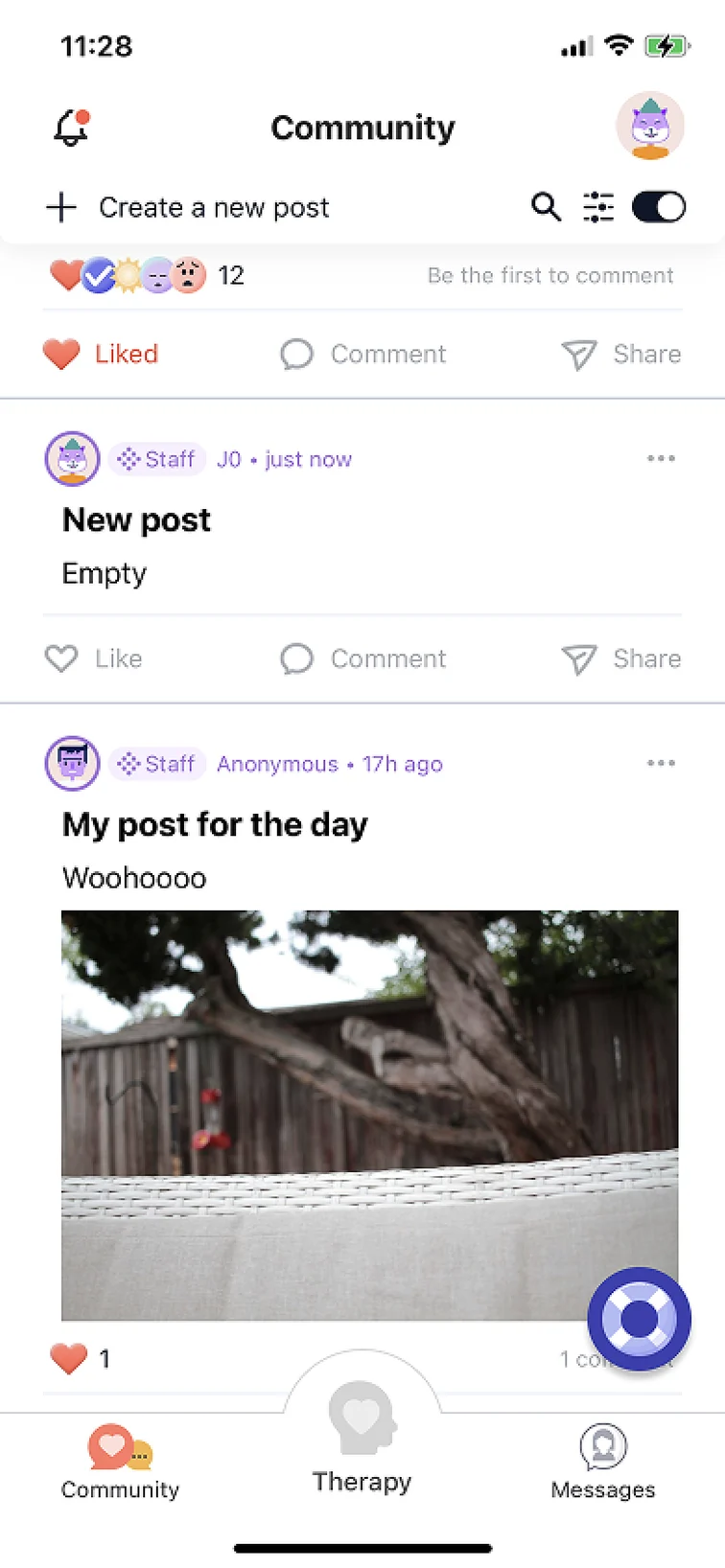
So search became a permanent, prominent part of the feed, and New post stayed one tap away.
The prompts are still the first thing you see.
20232026
⋮
On scroll down, 2023 and now. Search used to shrink to an icon; now it stays pinned with New post beside it. Drag to compare.
Support without reassurance
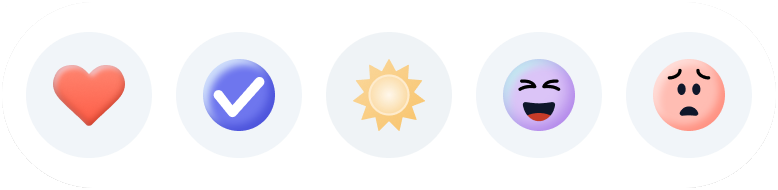
Given how sensitive the themes are, a like button was never enough. Liking a post about a
distressing intrusive thought feels wrong, and liking, posting or replying were the only ways to
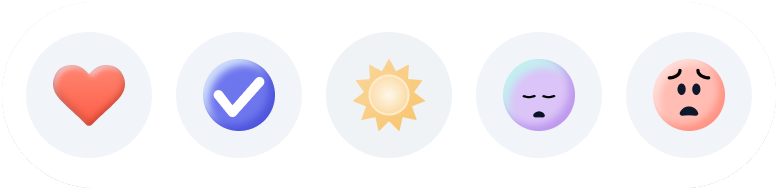
take part, which kept the bar too high. So we expanded the reactions.
Getting the set right took several rounds. The first included laughing. Soon after launch,
members started posting that they felt bad when a post that was never meant to be funny got a
laugh, so we took it out and sadness took its place. Later we redrew the set. Most posts aren't something to like or heart, so Support became
the default. It says "I'm here" without judgment.
2026: Support as the default reaction.
View earlier versions
2023, shortly after
Laughing out, sadness in.
2023
The first set, with laughing.
Usernames don't have to connect to who you are, so people share things here they wouldn't
anywhere else. Some of those posts ask for reassurance or show suicidal intent. Members can flag
them, and our moderation system flags them too. Resources reach the author's account
immediately, and a human reviews the post and replies.
Recovery stories
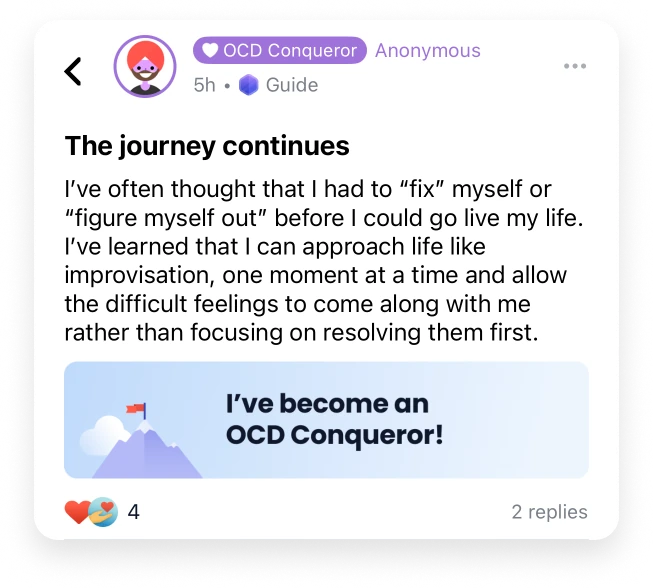
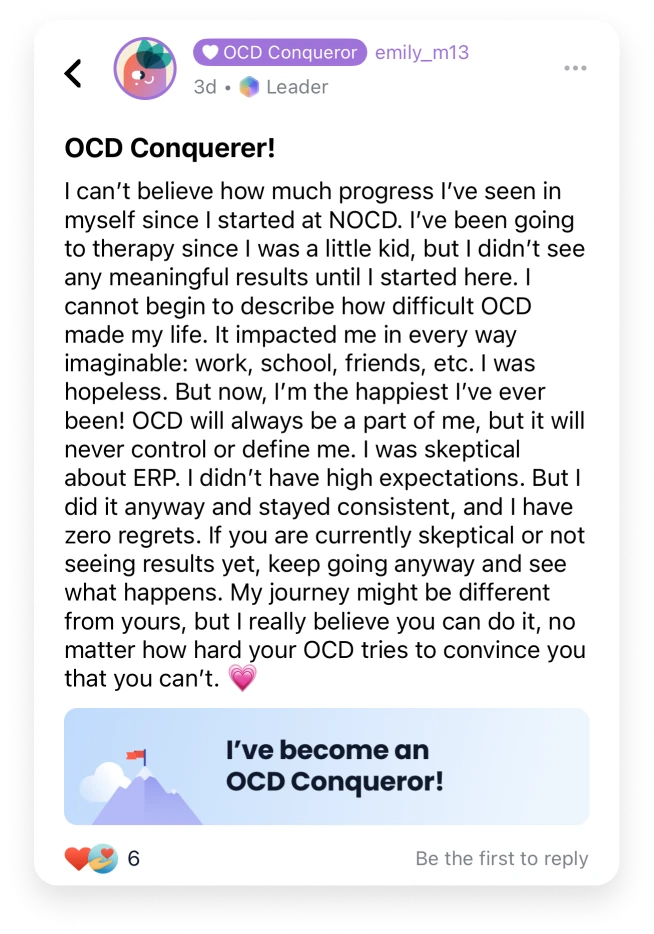
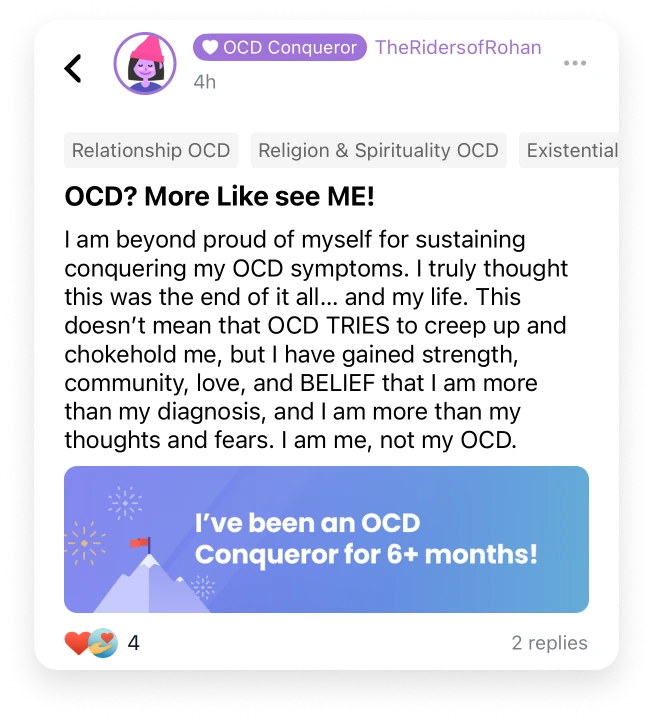
Posts from members further along in treatment get more visibility, so someone early on can
see that recovery is possible without the platform saying so. When a member chooses to share a
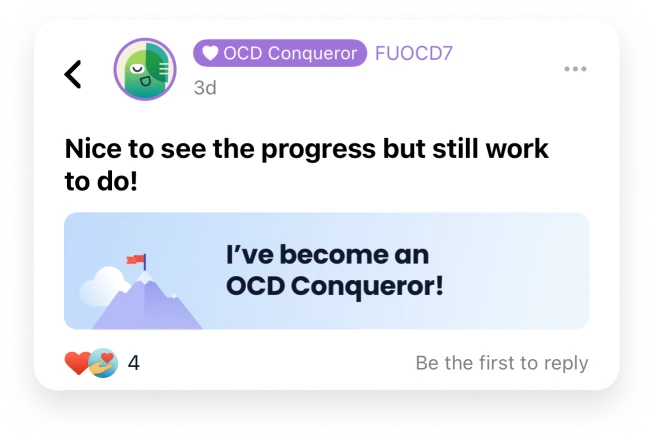
Conqueror milestone, the post carries a badge, so it reads at a glance as a credible, hopeful
example rather than platform messaging. Learn more about NOCD’s Conqueror program
Conqueror posts, each marked with the milestone banner.
What I chose not to build
No downvotes and no public leaderboards. The recognition program is capped and open only to
members who already understand their own OCD, so it can't become a gamification trap. I also
chose not to build friction for engagement's sake. The goal is real conversation between people
who understand each other, and that same conversation is what feeds the community's organic
reach.
Outcome
Search had the biggest measurable impact. We set our own rule that a post needed three or more
replies before it could be indexed by search engines. After search became part of the feed, the
number of posts that met that bar grew by 10%, without reducing the number of new posts, so
engagement went up. I also helped set up the indexing behind it: in the first two years after
that change, we indexed around 34,000 posts.
The Conqueror program has had a significant, lasting impact on therapist retention, clinical
outcomes, and new members.
34k
community posts indexed in the first two years after the switch to search
10%
more posts reaching three or more replies, with no drop in new posts