The Conqueror program recognizes a clinical milestone in OCD treatment and makes it visible to therapists, members, and newcomers, as proof that treatment works.
Role
Led end to end: research, service design, product, and design through delivery
Team
3 developers (web, iOS, Flutter), clinical stakeholders, senior leadership across marketing and product
Timeline
About 2 months, research to MVP
Outcome
A scalable system for personal testimonials, in place for more than three years
Context
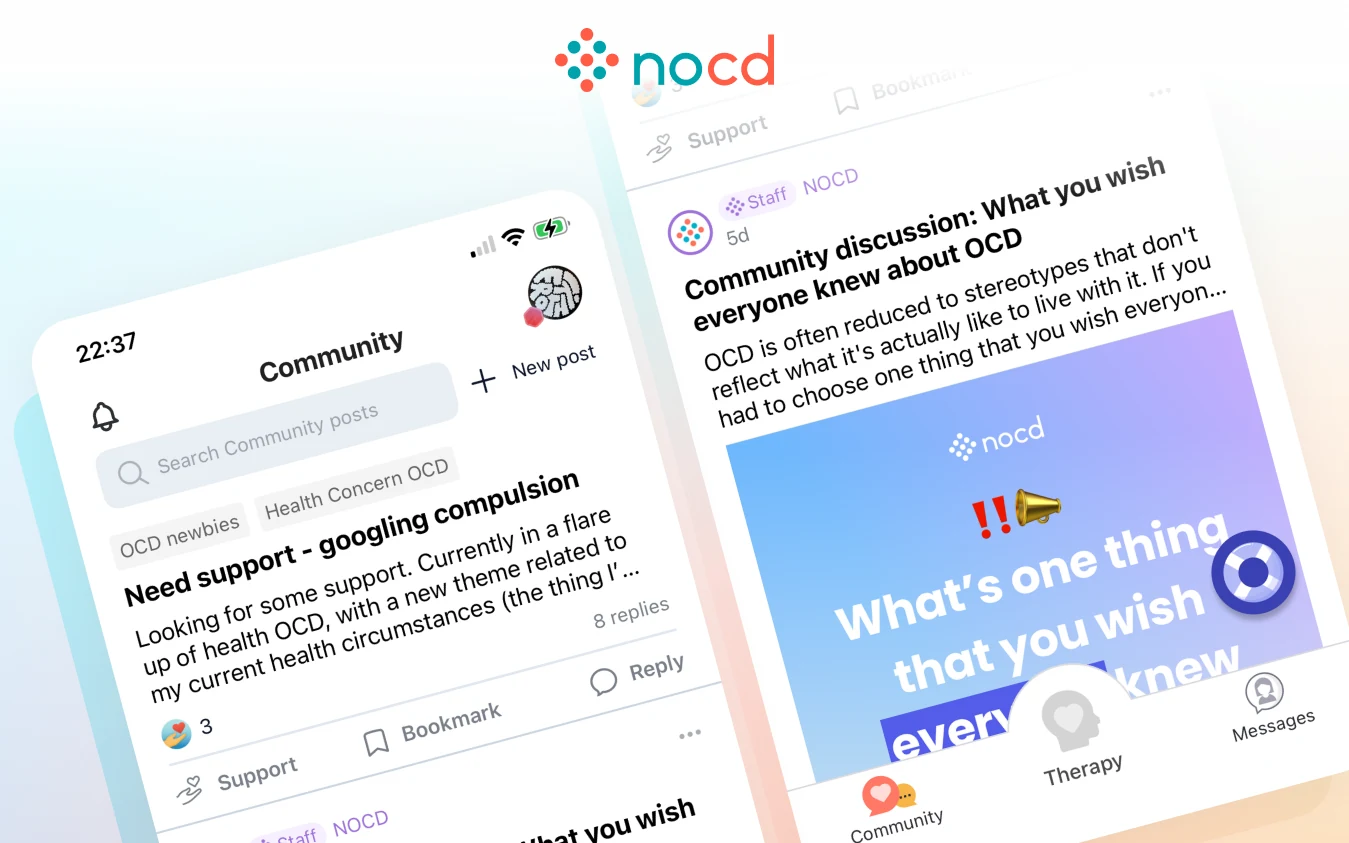
In treatment, a 35% reduction in symptoms counts as a clinically significant improvement. To most people, that’s just a number. As a company, we need our successes tied to our clinical protocol and to symptom reduction, to show that treatment works and that therapists perform to that standard. Meanwhile the community leaned heavily toward venting, and the members who had gotten better were mostly invisible.
The original request was simple: badges for people in therapy. But a badge that shows someone is in therapy is sensitive health information, in a community where members share things they would tell no one else. Privacy and consent had to shape the design from the start.
So the question was how to make one clinical outcome mean something to four groups at once:
Therapists, who want to see the impact of their work.
Members in the middle of treatment, who need proof that progress lasts.
Newcomers, who are more likely to trust another person with OCD than a company.
Payers, who need clear evidence of how people are getting better.
The decisions
More than a badge: a clinical letter of acknowledgment
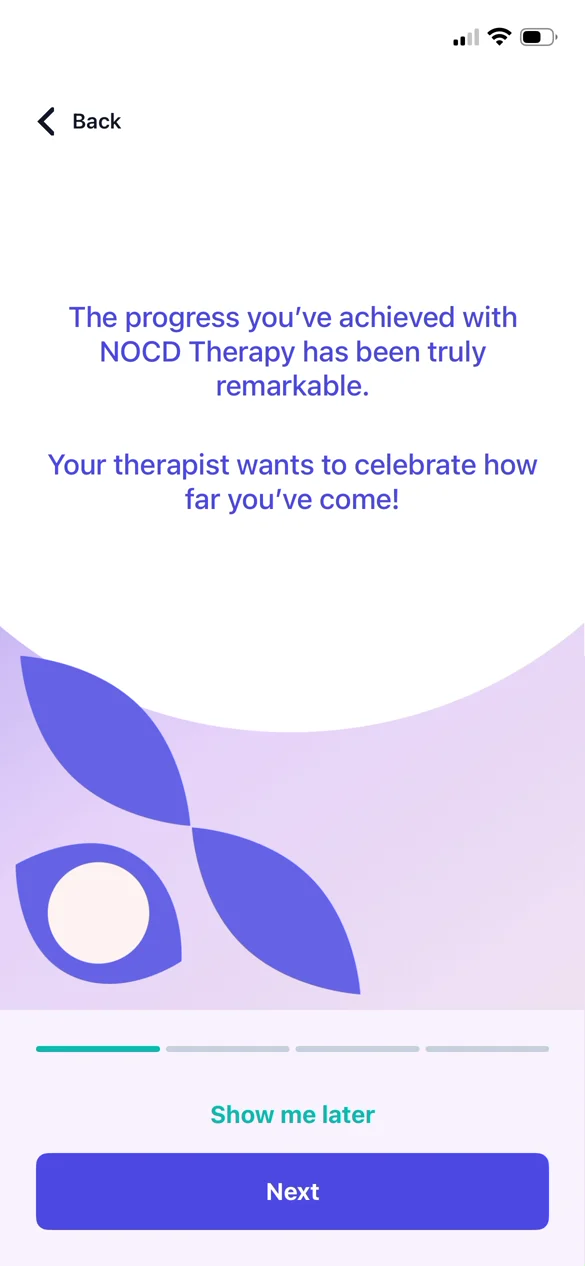
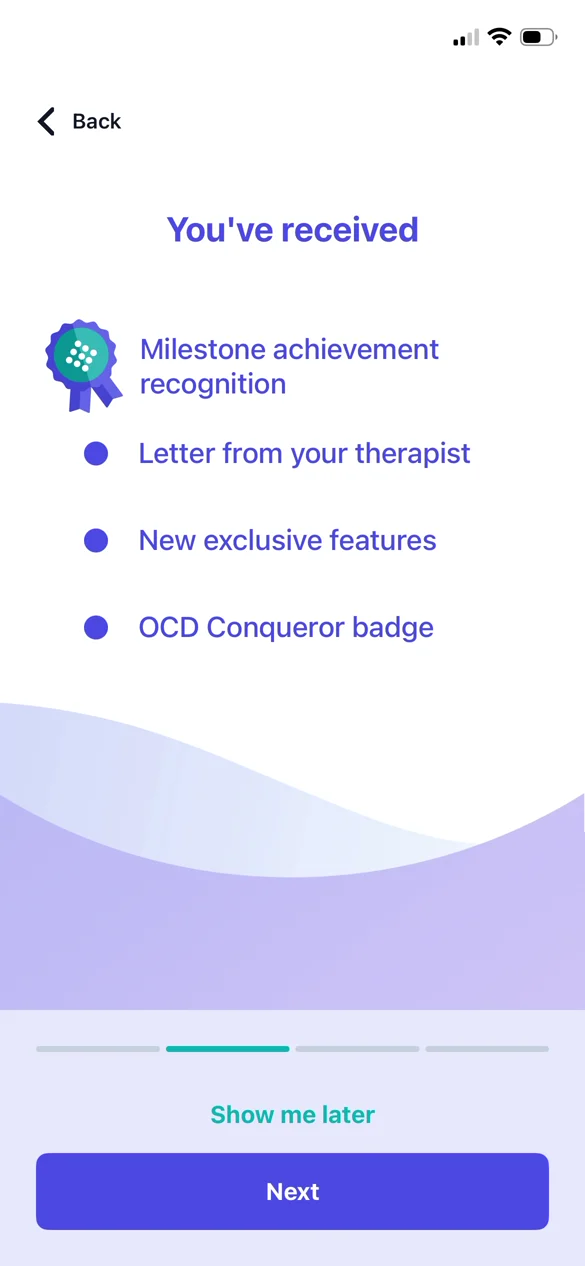
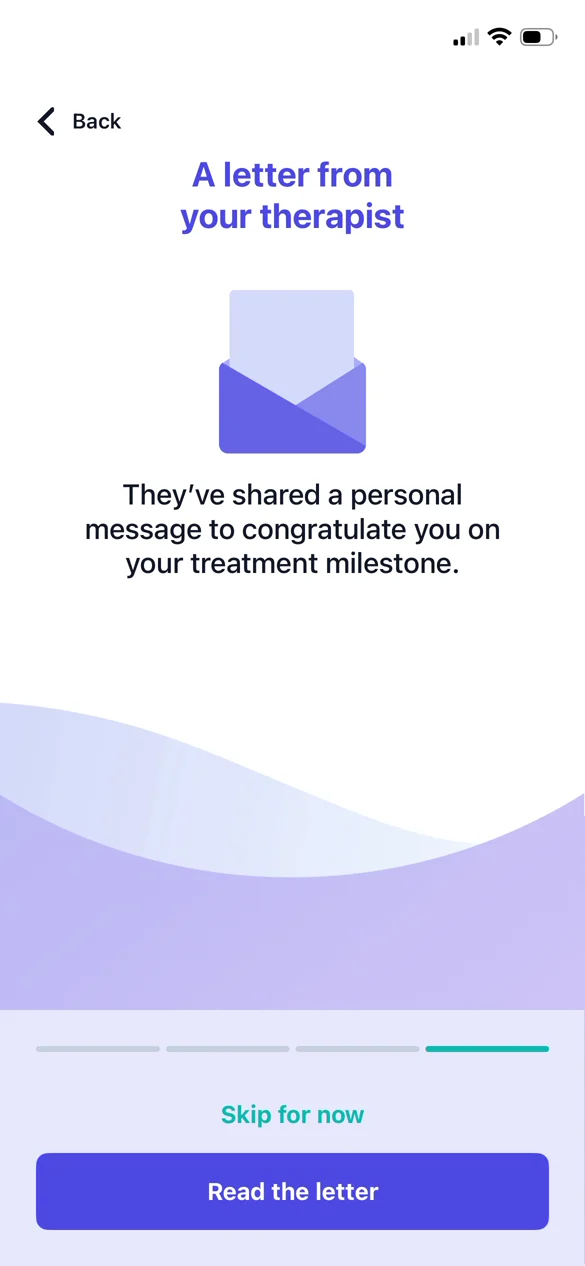
In our interviews, one artifact kept coming up: a letter from the therapist, a common practice in therapy. Its purpose is a permanent reminder of what the member has conquered that they couldn’t when they started. So the badge is the member’s first moment, and the letter is what gives it weight: they receive the badge, then open their therapist’s letter acknowledging their progress. On the therapist side, the system encourages writing the letter, with templates, without making the milestone depend on it.
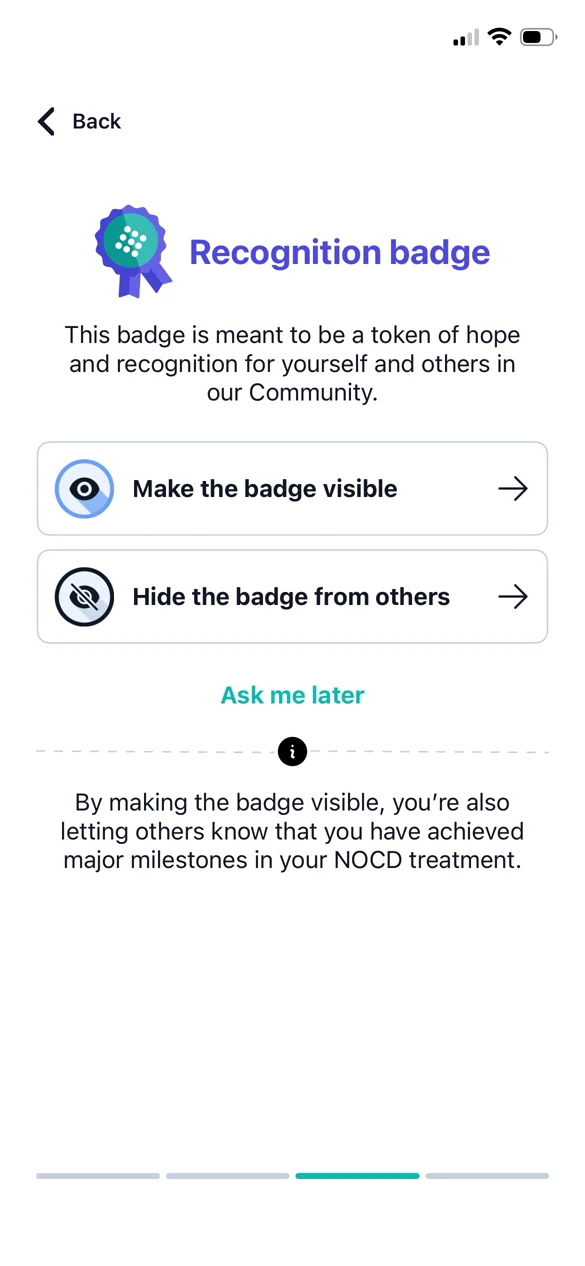
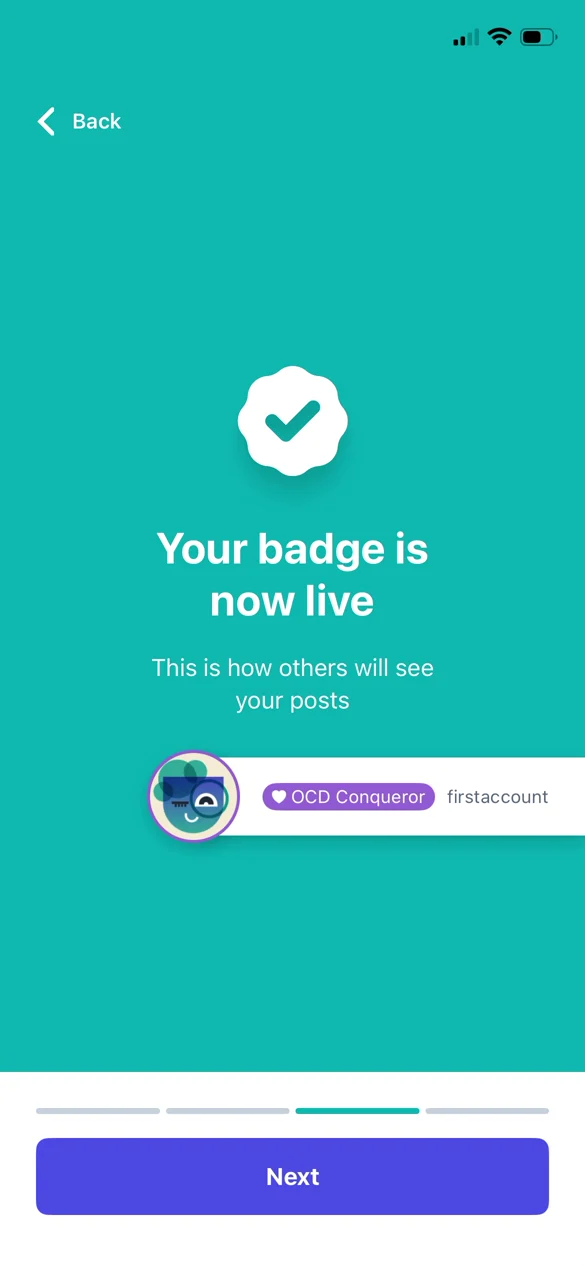
1Congratulations2Your therapist wants to celebrate3What you’ve received4Show or hide the badge5The badge is live6The therapist’s letter
The member’s journey, from the badge to the therapist’s letter. Scroll sideways to follow it.
The therapist validates the outcome
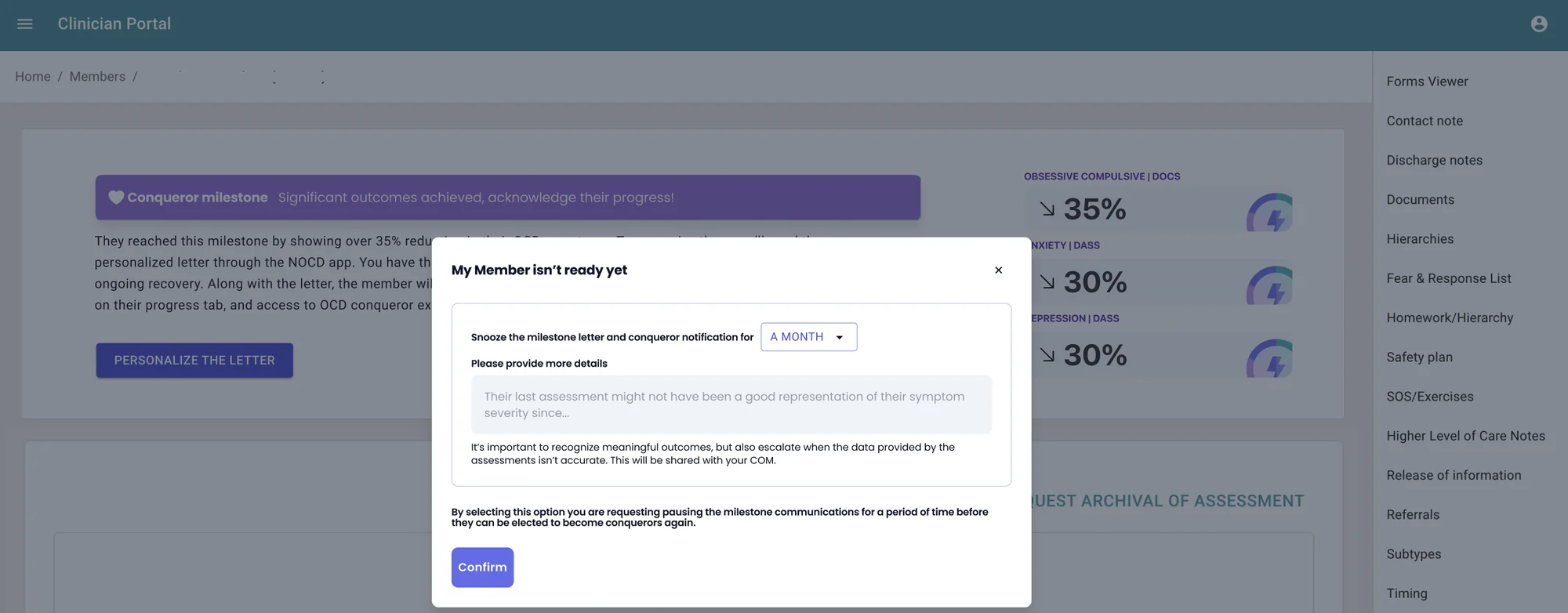
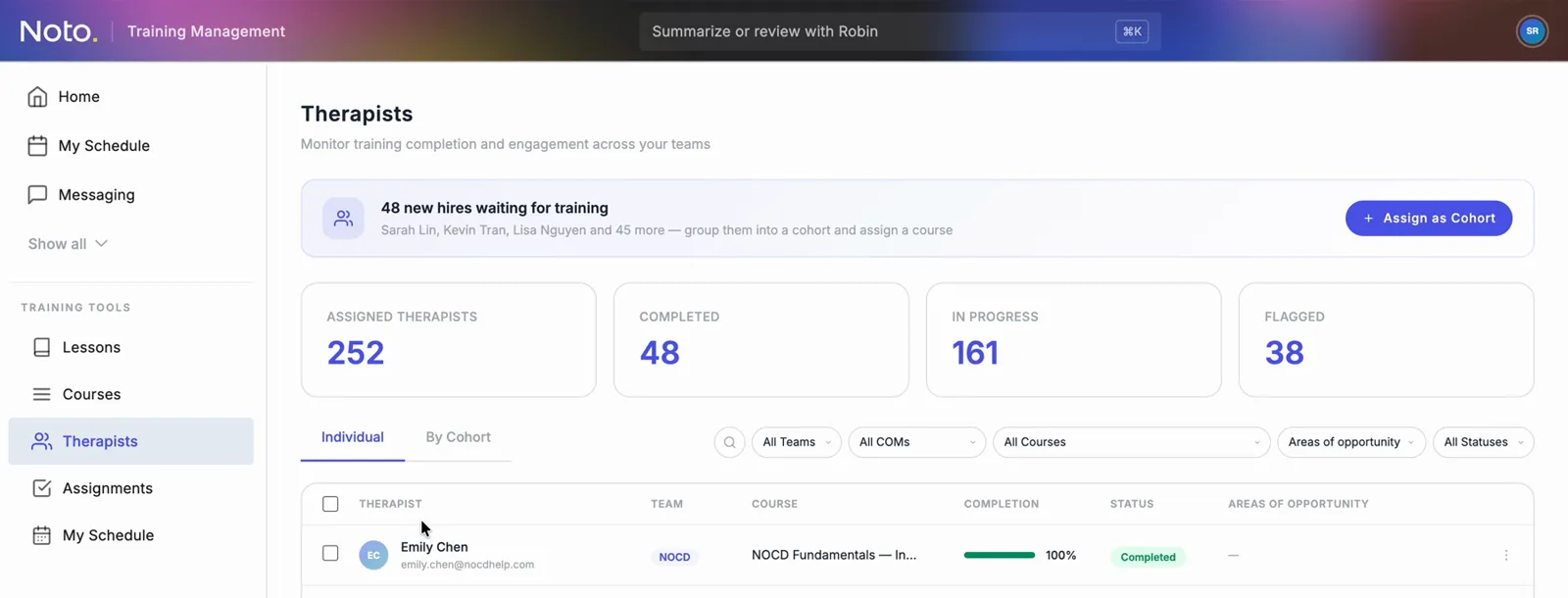
Members can fill out forms incorrectly, so the therapist confirms the clinical outcome from the forms. Without that validation, a member can’t become a Conqueror. If the scores don’t reflect how the member is really doing, the therapist marks that they aren’t ready yet, which pauses the milestone. The therapist stays in the loop, and the badge carries a clinical stamp.
In Noto’s clinician portal, the milestone appears on the member’s record.
Consent at every step
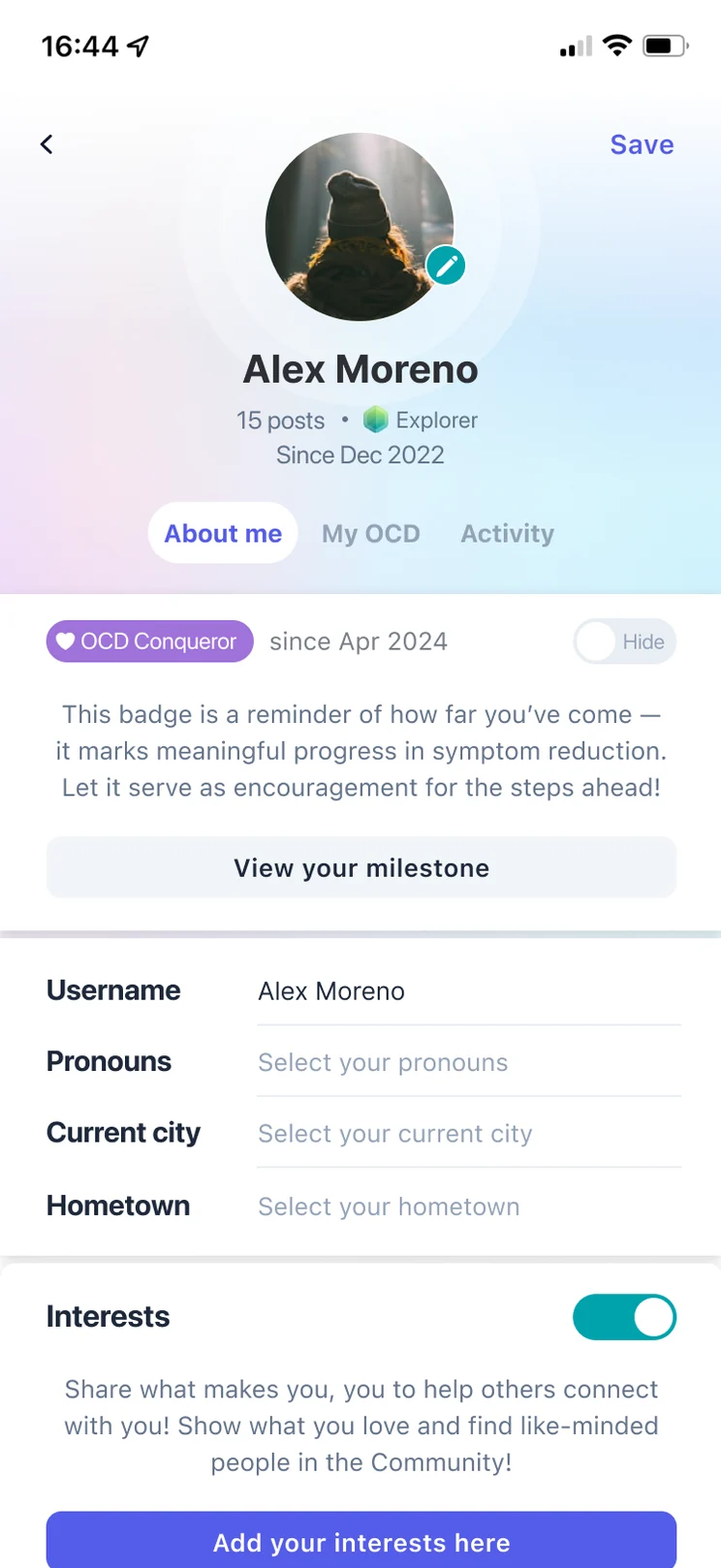
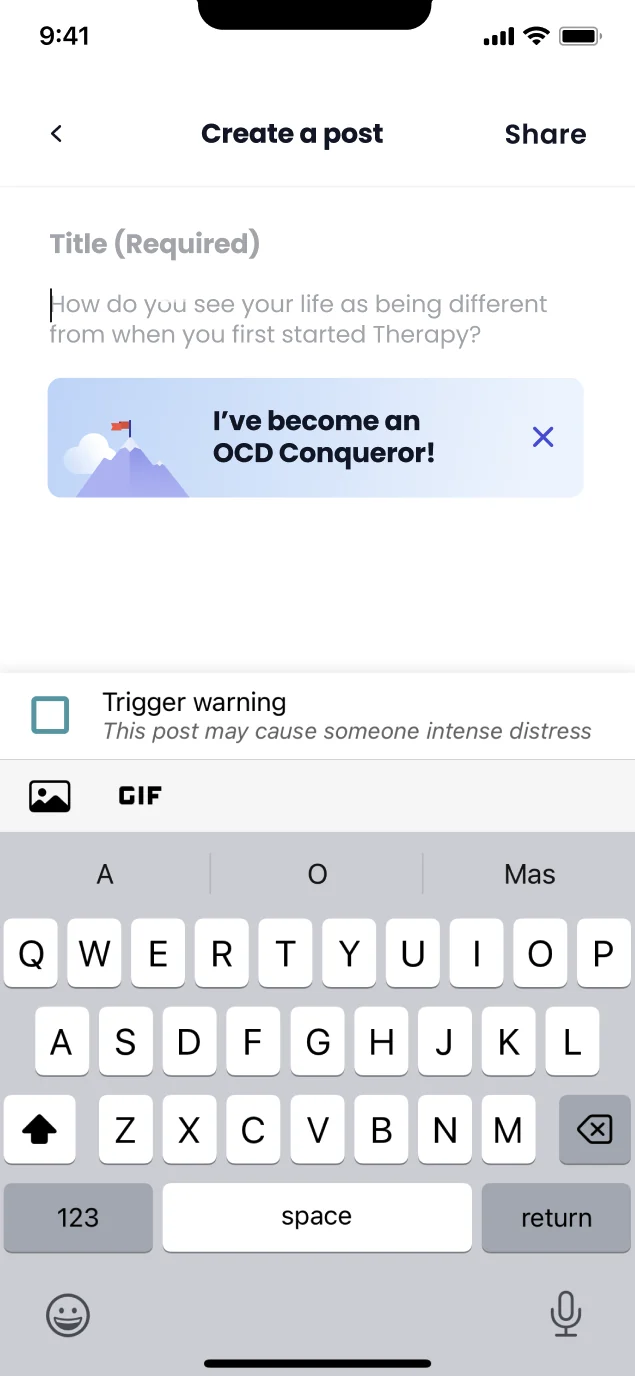
Nothing about a member’s treatment becomes visible without their say. The milestone, the letter, and the badge are private by default. Making the badge public is one choice. Writing a post about reaching the milestone is a separate one. A member can do either, both, or neither.
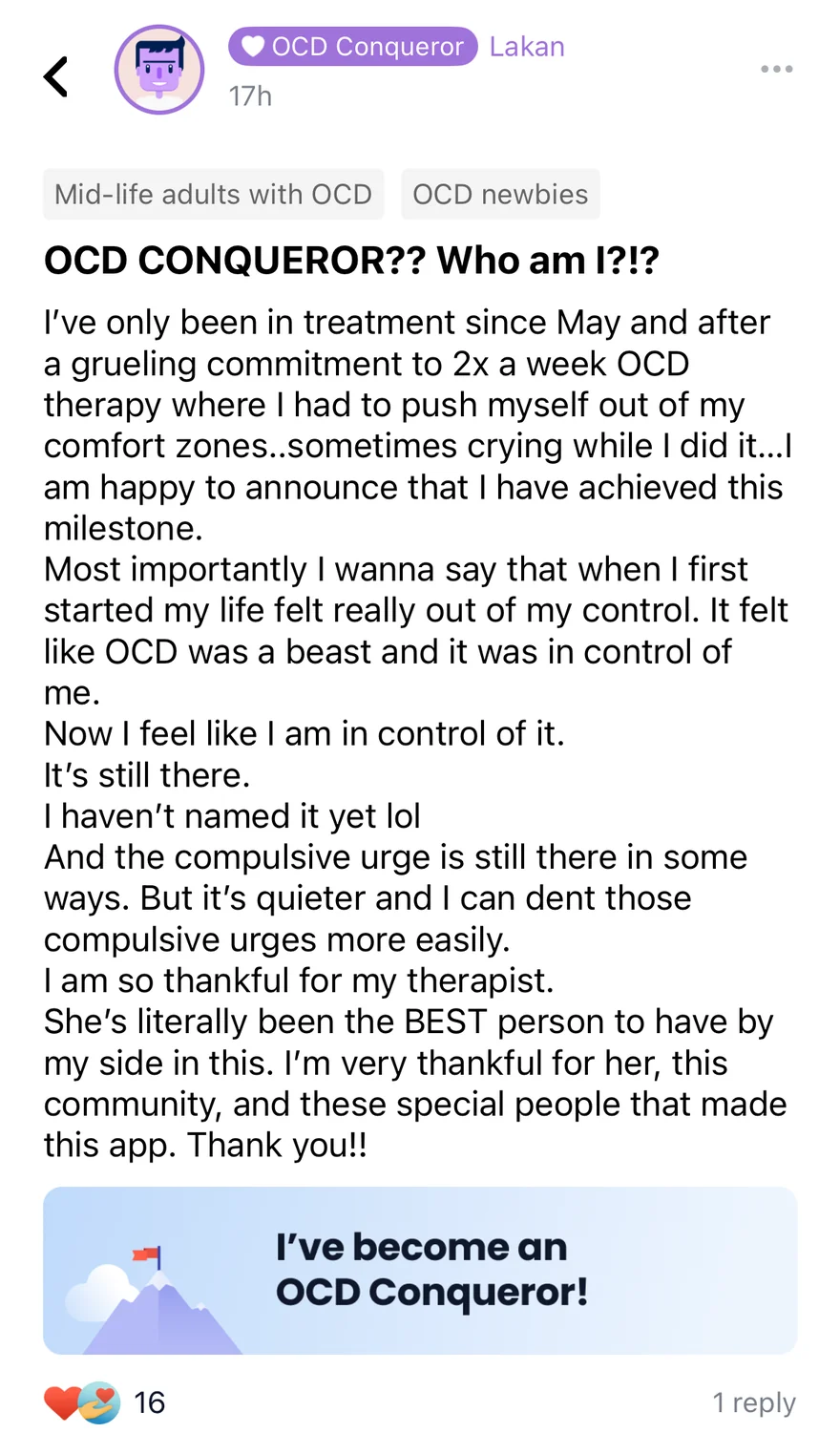
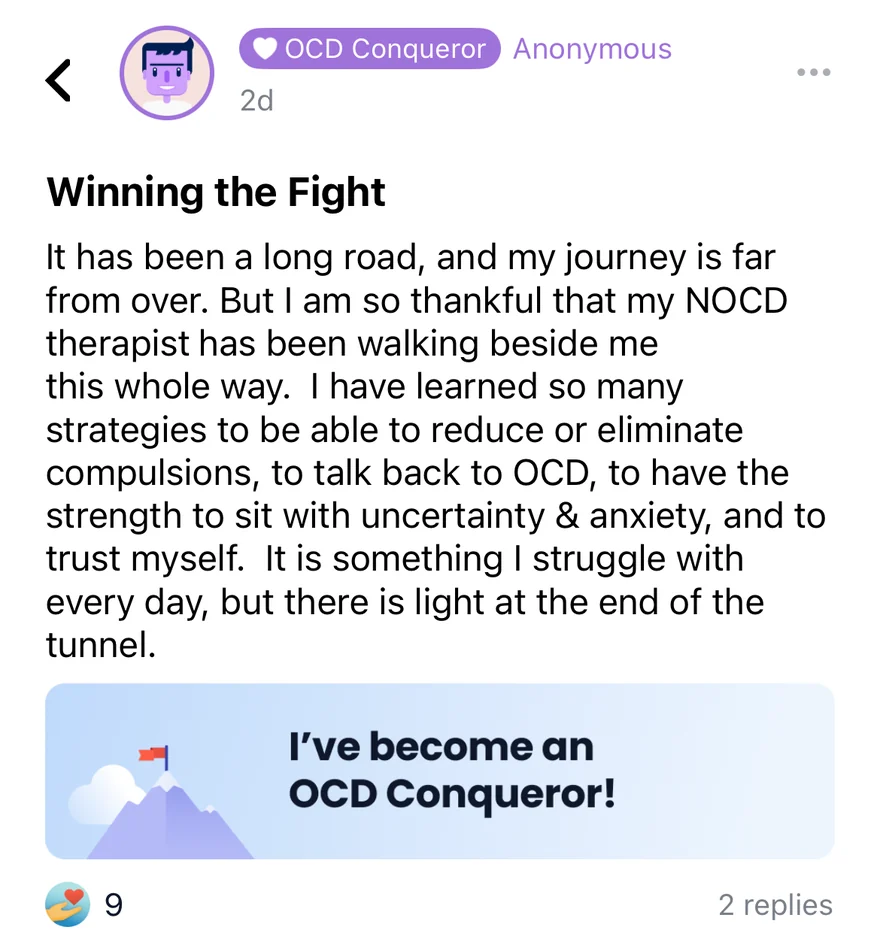
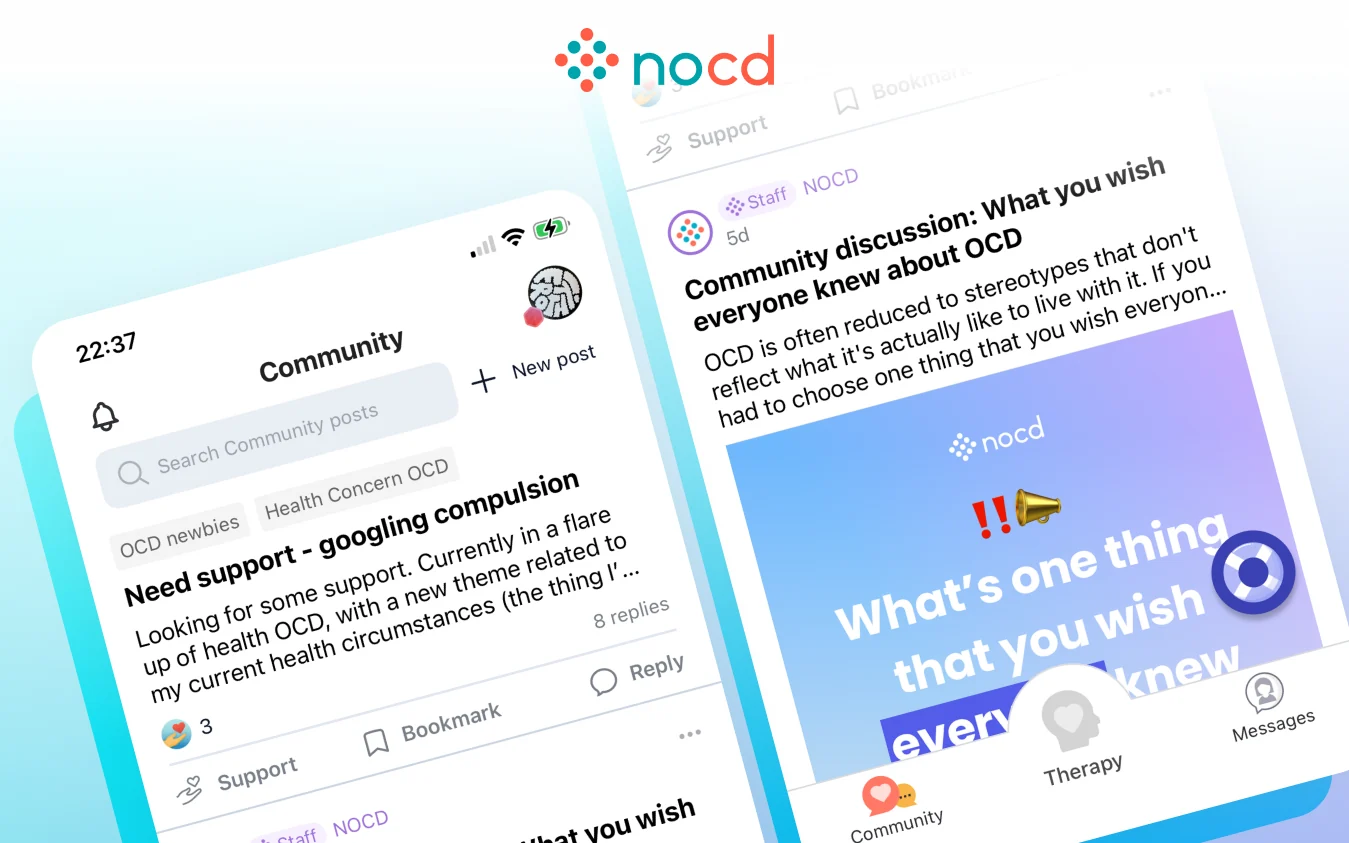
A shared post is both a celebration and a message to people a few stages behind who aren’t sure OCD is treatable. It carries a banner so the community recognizes it at a glance.
BeforeAfter
⋮
The badge on the member’s profile, with a toggle to hide it. Drag to compare.
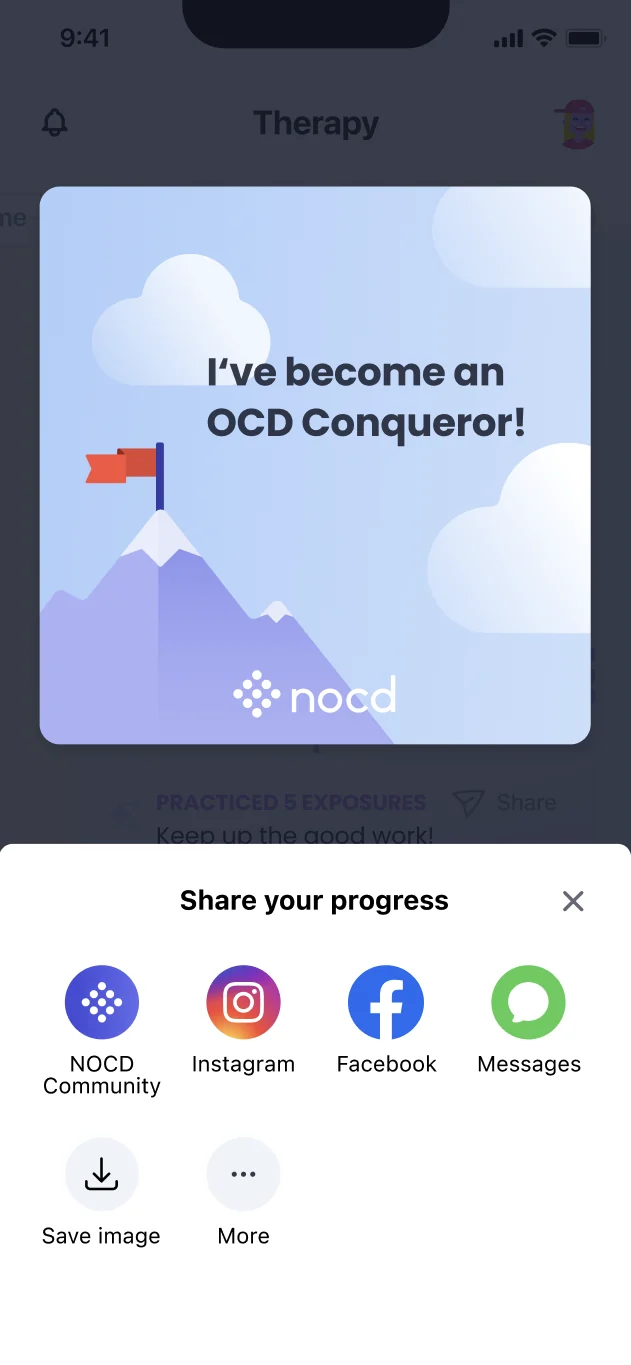
Shared as a Community post with the Conqueror banner, or outside the app.
One home for every milestone
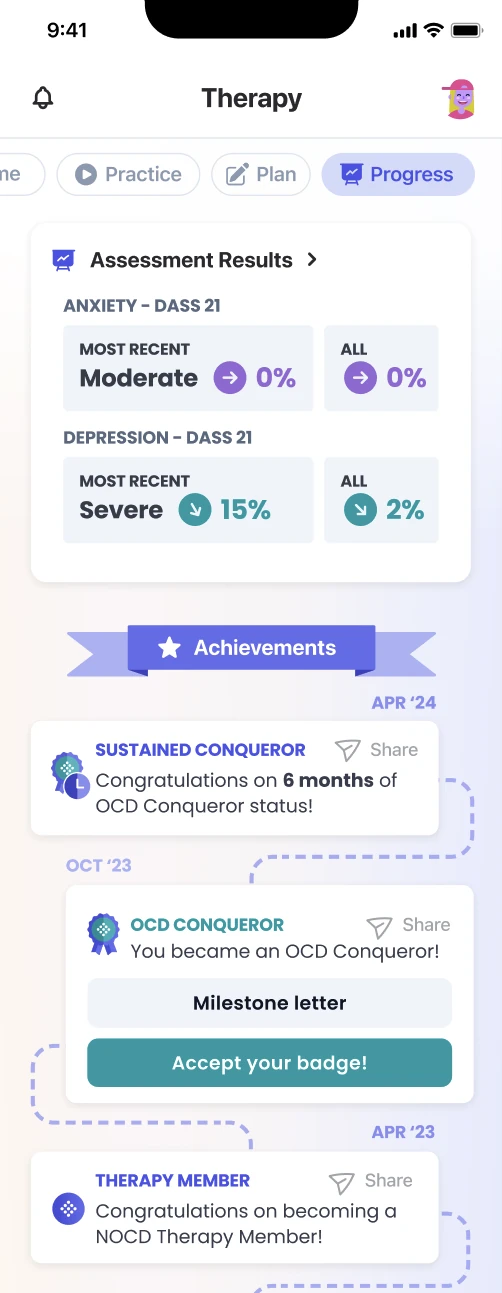
To support these initiatives, I also designed and maintain the Progress tab and the notification system behind it, which give members visibility into both their therapy and their community progress.
The Progress tab: clinical and community milestones in one timeline.
What I chose not to build
No badges for the sake of engagement, or without a meaningful clinical improvement behind them. No badges that can be lost, since the milestone is permanent. And since these are clinical artifacts, no system that runs without clinical and human supervision, because the personal relationship between a member and their therapist stays at the center of treatment.
Outcome
Celebrating progress with their therapist keeps members in care longer, and seeing that impact keeps therapists at NOCD longer, so the program was one of the levers behind improved retention. Consented testimonials feed marketing and SEO, and the posts shift the tone of the community, helping break the rumination loops members are prone to.
1,300
Conqueror milestones shared in the community in the program’s first three years
3+ years
and it’s still a core clinical metric, a community engagement lever, and a marketing lever
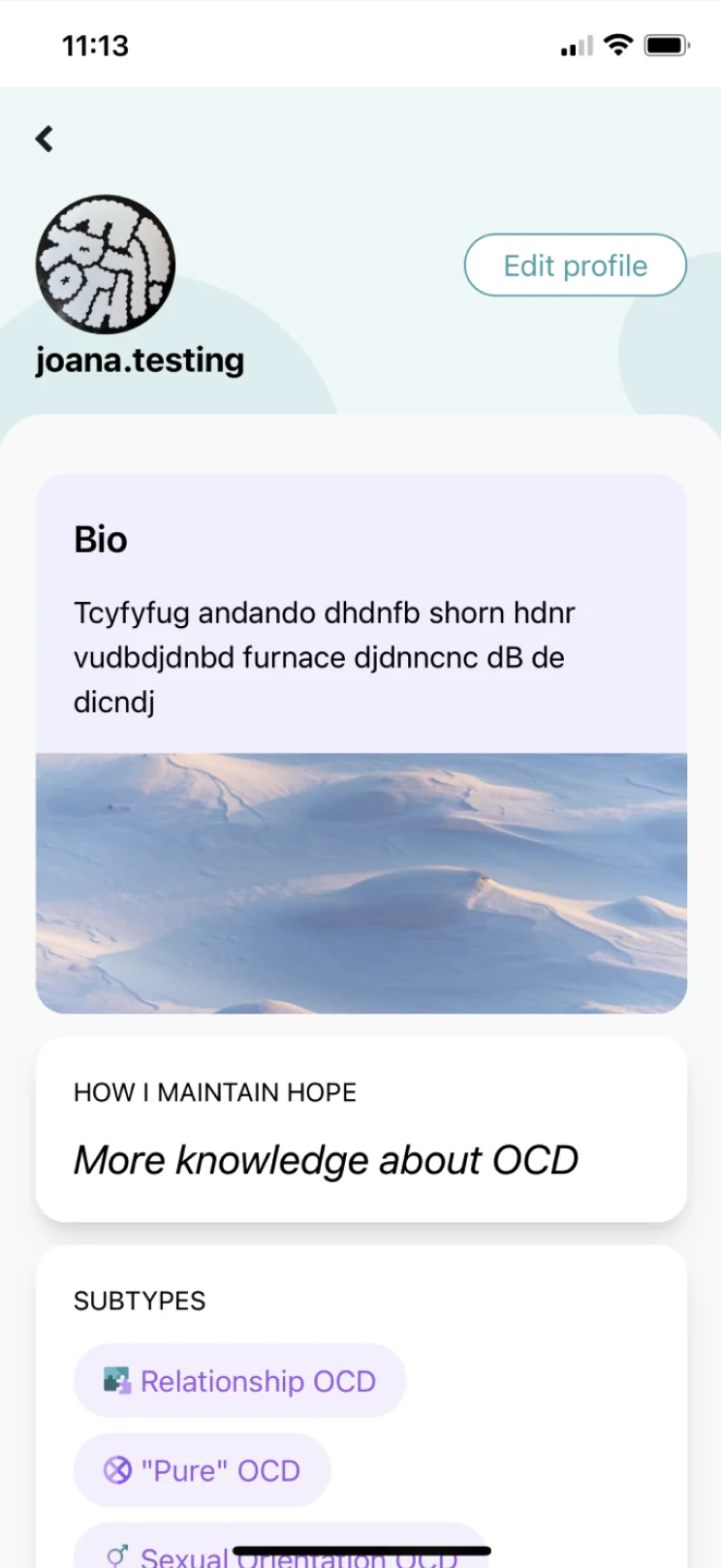
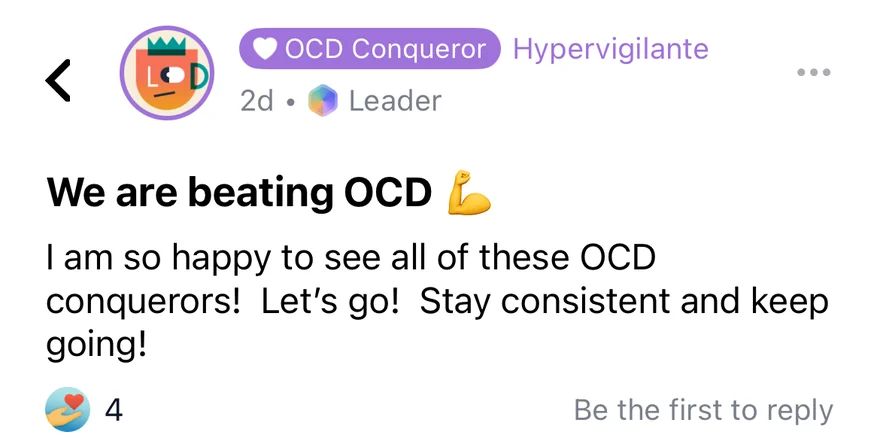
Conqueror posts from the community, each carrying the banner.